2. On-Site Inspection Process
1. Testing the Returned Harnesses
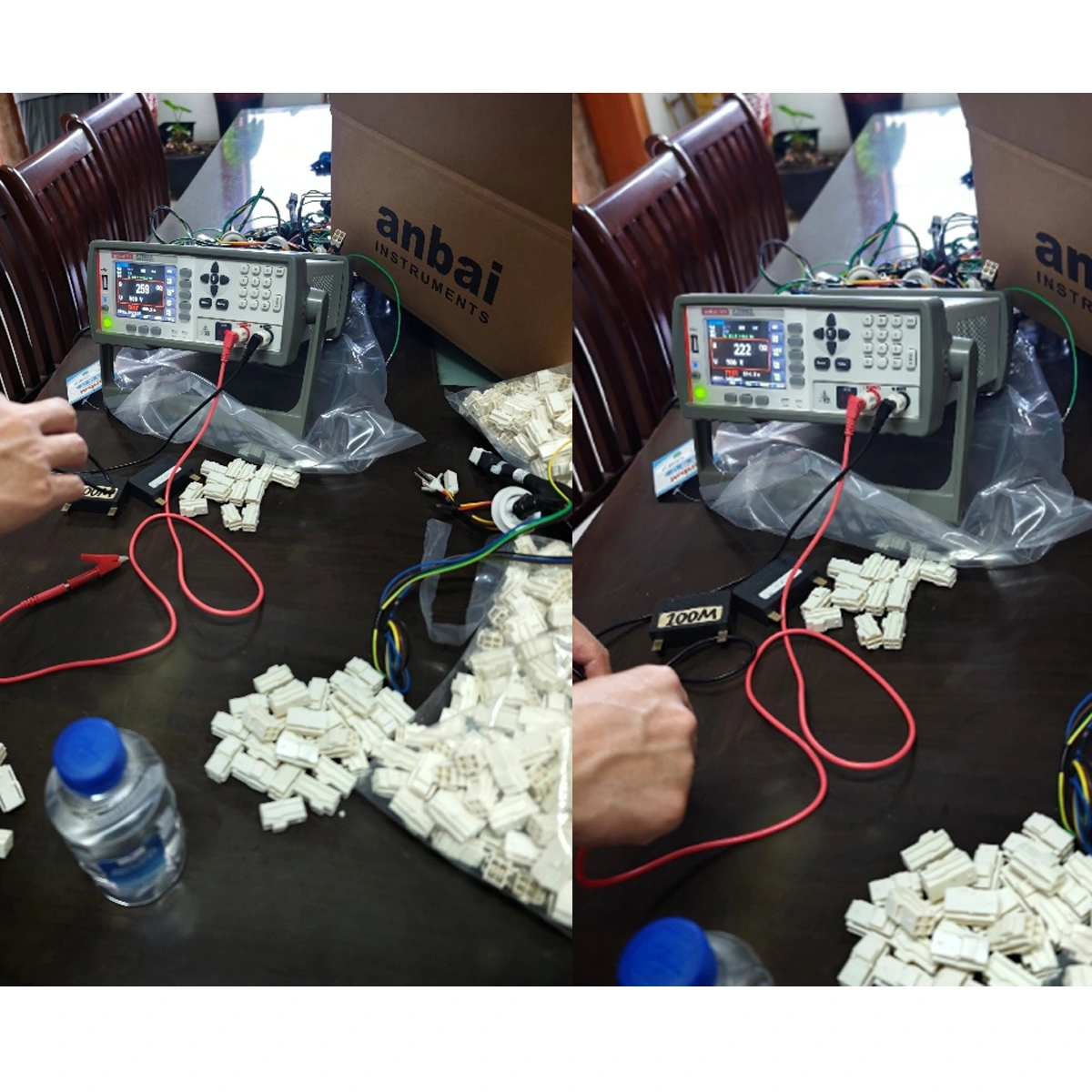
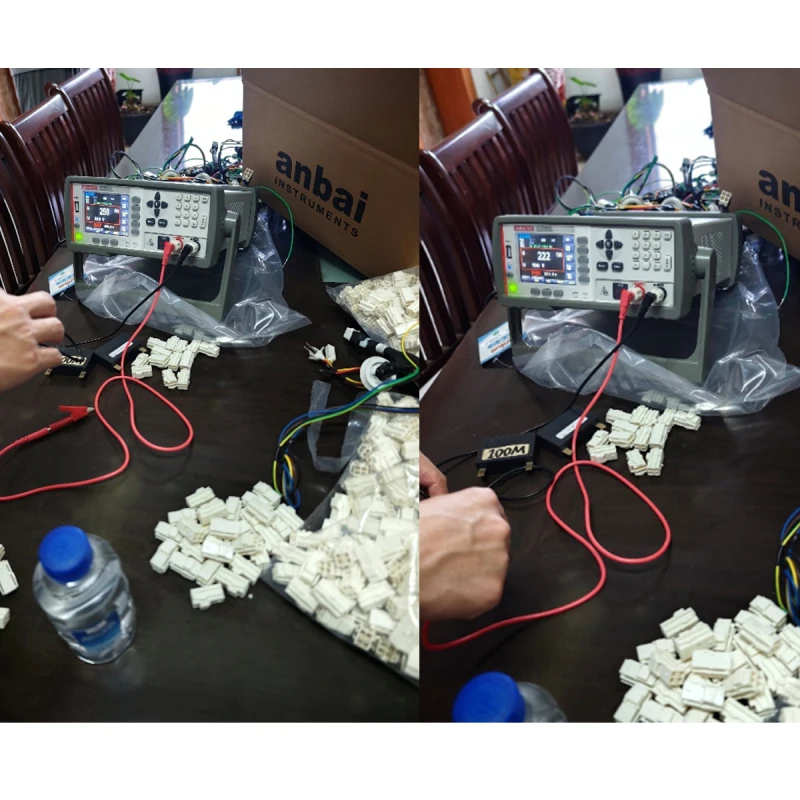
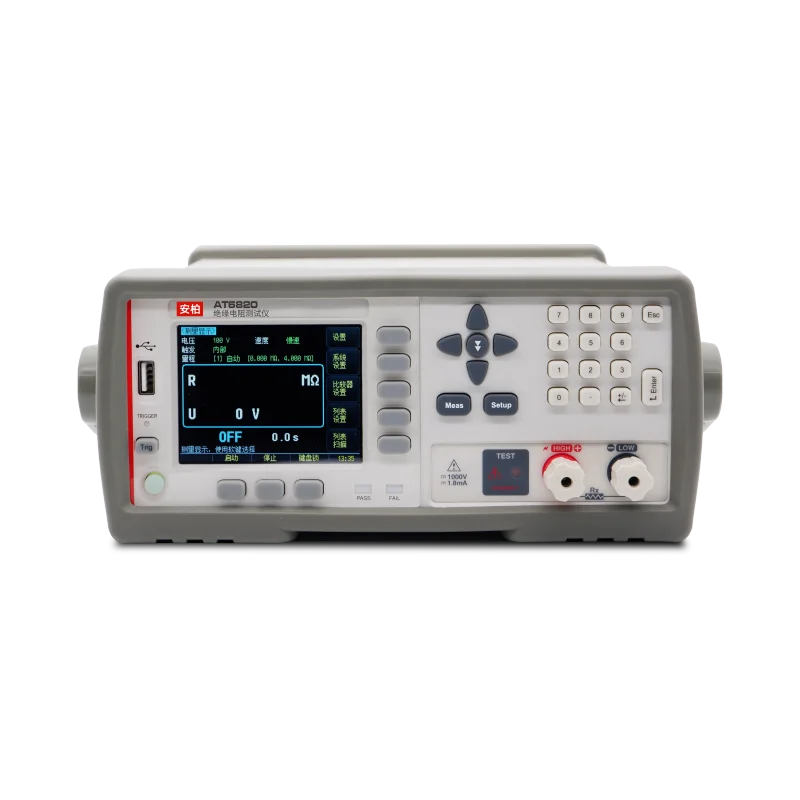
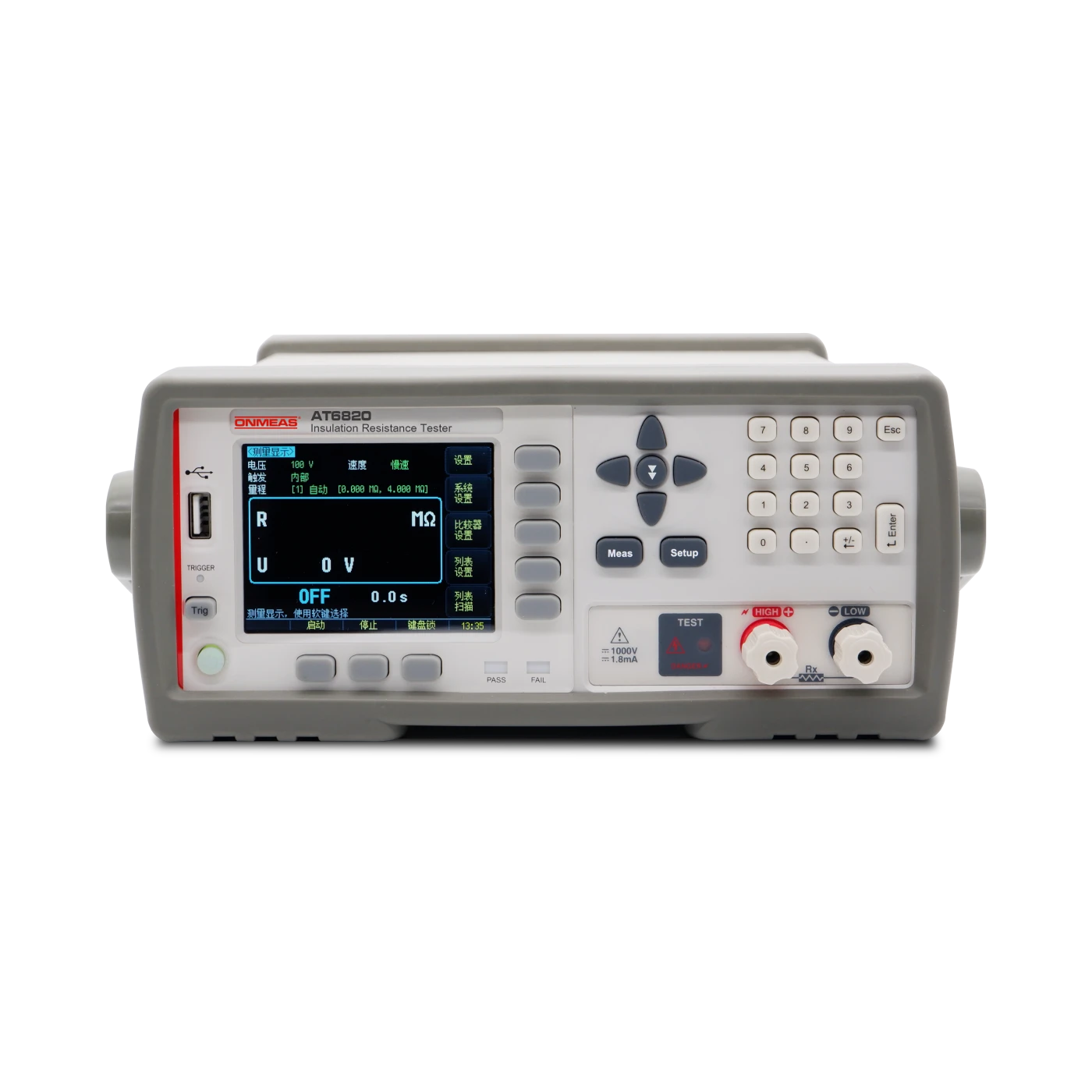
With the AT6820 set to a test voltage of 500V, the returned non-conforming harnesses were tested directly: many samples showed insulation resistance of only tens of MΩ, well below the customer's outgoing acceptance standard of ≥100MΩ, and there was no visible damage or cracking.
2. Comparison with New Original Terminals
Unopened, unassembled new terminals from the warehouse were taken and tested separately; their insulation resistance all reached the GΩ level, far above the acceptance standard, which ruled out the initial assumption that the recycled material itself has poor insulation.
3. Humidity Verification Test
Considering Guangdong's rainy, highly humid environment and the tendency of harnesses to absorb moisture when stored after processing, the terminal areas of the returned harnesses were dried with a hair dryer for several minutes; insulation resistance then returned entirely to the standard range and the tests passed.
3. Determination of the Root Cause
The batch insulation failure was not caused by the quality of the terminal plastic raw material. The real causes were:
1. The terminal plastic parts readily absorb moisture, and the air in the production workshop, warehouse and transport environment is very humid, so water vapour is absorbed inside the terminals;
2. After harness assembly, the cavity sealing is poor and water vapour remains on the contact surfaces of the harness terminals;
3. Guangdong has high temperature and humidity all year round, so water vapour cannot evaporate during transport of finished products; leakage current increases during the 500V insulation test and insulation resistance drops sharply.
4. Improvement Recommendations for the Customer
1. Moisture Control in Production
Injection-moulded and incoming terminals should be assembled immediately after opening, and unused terminals should be stored in sealed moisture-proof bags; dehumidifiers should be installed in the workshop to keep ambient humidity within a reasonable range.