Comprehensive Battery Test Solution for State Grid Monitoring Equipment
Battery Measurement
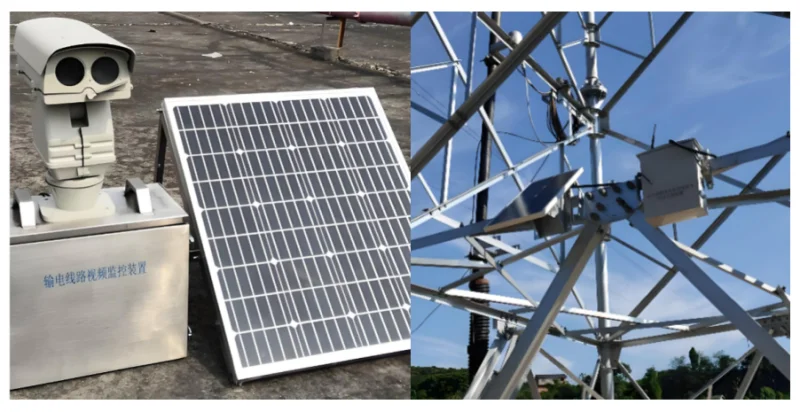
Video monitoring equipment on State Grid transmission lines is usually deployed in remote field areas and mostly powered by solar panels plus storage batteries. Such equipment generally uses LiFePO4/lithium batteries and endures high-low temperature cycling, day-night temperature differences and occasional consecutive rainy days all year round. In practice, capacity fade, increased internal resistance or failures caused by protection board faults are common; traditional manual multimeter testing only obtains static voltage and cannot accurately assess the battery's true state of health (SOH) and actual load capability. Introducing the professional AT5800 comprehensive battery tester for standardized, all-round testing of spare parts incoming inspection and repaired batteries therefore has important practical significance.
1. Test Requirements
1. State of Health (SOH) Evaluation
Precisely measure the percentage of actual capacity against nominal capacity, screen insufficient endurance caused by cell ageing or sulphation, and ensure the battery can keep the equipment running through consecutive rainy days.
2. Internal Resistance Consistency Inspection
Measure the AC and DC internal resistance of the battery, identify high internal resistance risks caused by poor welding, loose connections or cell deterioration, and prevent power loss during low-temperature startup or high-power-consumption modes.
3. Protection Function Verification
Simulate extreme conditions such as overcharge, over-discharge, charging over-current, discharging over-current and short circuit to verify the response threshold and recovery function of the battery's built-in protection board and prevent safety accidents caused by BMS failure.
4. Efficient Batch Testing
For incoming inspection of large quantities of spare parts and re-judgement of repaired batteries at grid operation centres, traditional inspection is inefficient, so an automated, multi-station test system is needed to improve overall testing efficiency.
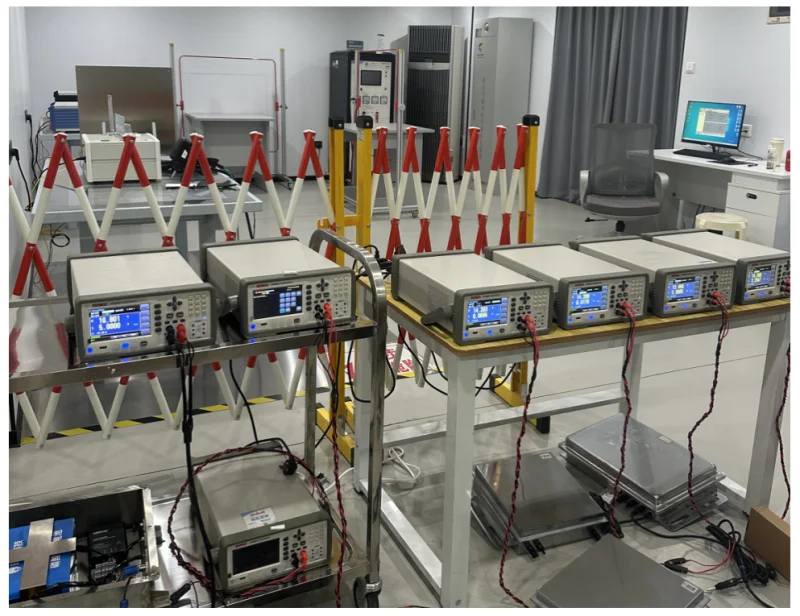
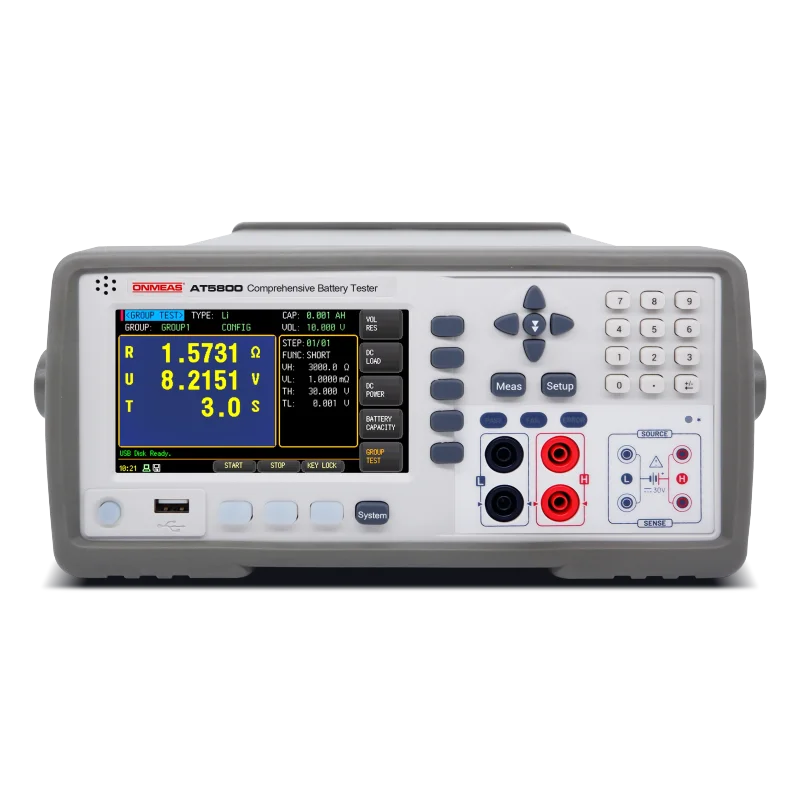
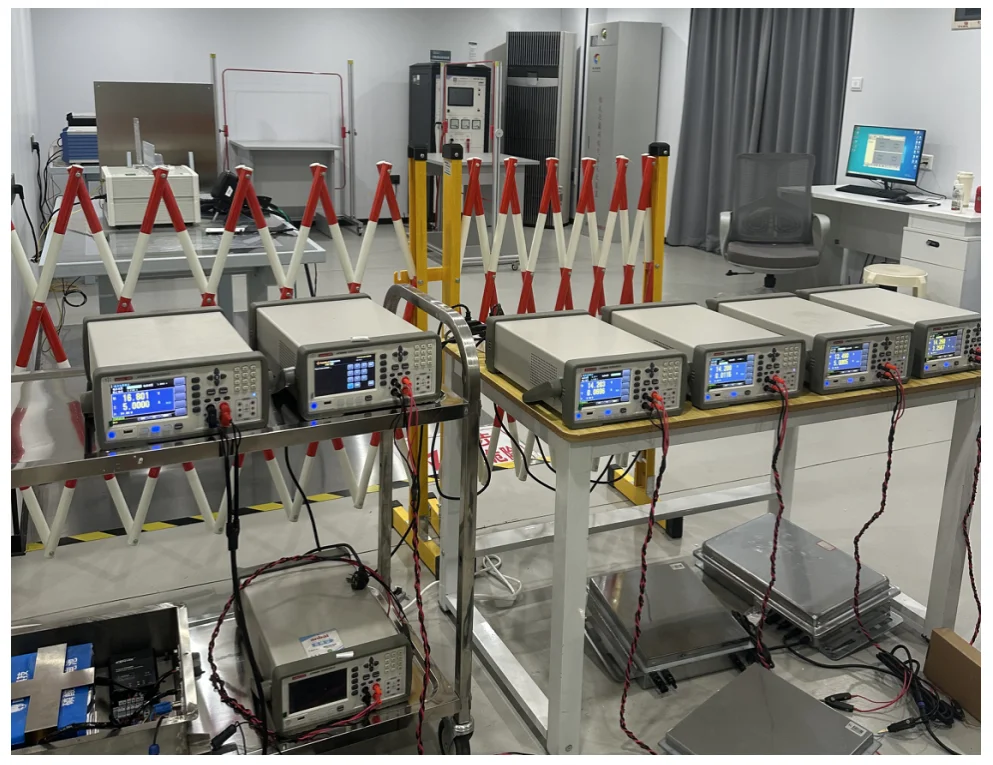
Using the ONMEAS AT5800 comprehensive battery tester as the core test unit to build a battery test workstation.
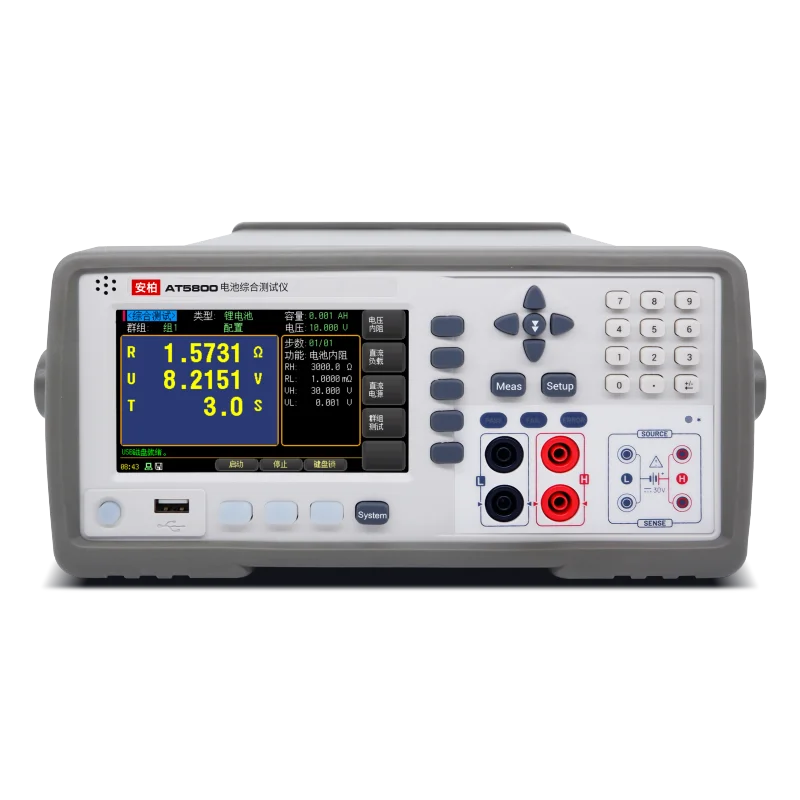
ONMEAS AT5800 technical advantages
2. Equipment Selection and Configuration (Customer Case)
Wide-Range High-Precision Measurement
It supports wide-voltage testing from 0.00001~80.0000V, covering mainstream State Grid battery packs; internal resistance accuracy of ±0.5% precisely captures small performance drift of batteries.
High-Speed Charge/Discharge Test Capability
It supports charging and discharging up to 100W/200W; together with the automatic scanning function, complete capacity calibration from full charge to full discharge can be finished in a short time, greatly shortening the test cycle.
Full-Function Protection Board Inspection
A built-in programmable comprehensive test mode completes automatic scanning and judgement of overcharge voltage, over-discharge voltage, over-current protection points and recovery time with one key press, without repeatedly adjusting the power supply manually, significantly improving the accuracy and efficiency of testing batteries with BMS protection boards.
Automation Integration Interfaces
Standard RS-232/USB communication interfaces support the SCPI standard command set and Modbus protocol and can connect to PLCs, barcode scanners and host MES systems, enabling a fully unmanned workflow of scan to retrieve parameters, automatic testing, data upload and traceability.
Smart Sorting and Data Traceability
The built-in comparator supports multi-level sorting (such as grade A/grade B/defective); all test data (including voltage, internal resistance, capacity, protection values, timestamps and serial numbers) is stored in the database in real time for SPC statistical analysis and full life-cycle quality traceability.
3. Summary of Core Advantages
High Reliability Assurance
Comprehensive capacity, internal resistance and BMS function testing effectively removes sub-healthy batteries, reducing the offline rate of monitoring equipment at the source and ensuring long-term stable operation of transmission line monitoring systems.