Cable Resistance Test Solution

Cable Resistance Test Solution

Low Resistance Test

In the final assembly and outgoing quality control (OQC) stages of wire and cable manufacturing and harness assembly, the continuity and contact reliability of conductors directly determine the safety of the electrical system and the stability of signal transmission. After crimping, injection moulding and assembly, a harness forms a complex series-parallel network internally; as automotive electronics and industrial control adopt high-density connectors, the number of cable nodes increases sharply, placing higher demands on the precision and efficiency of continuity and loop resistance testing.

1. Customer Test Requirements

1. Continuity and Loop Resistance Testing

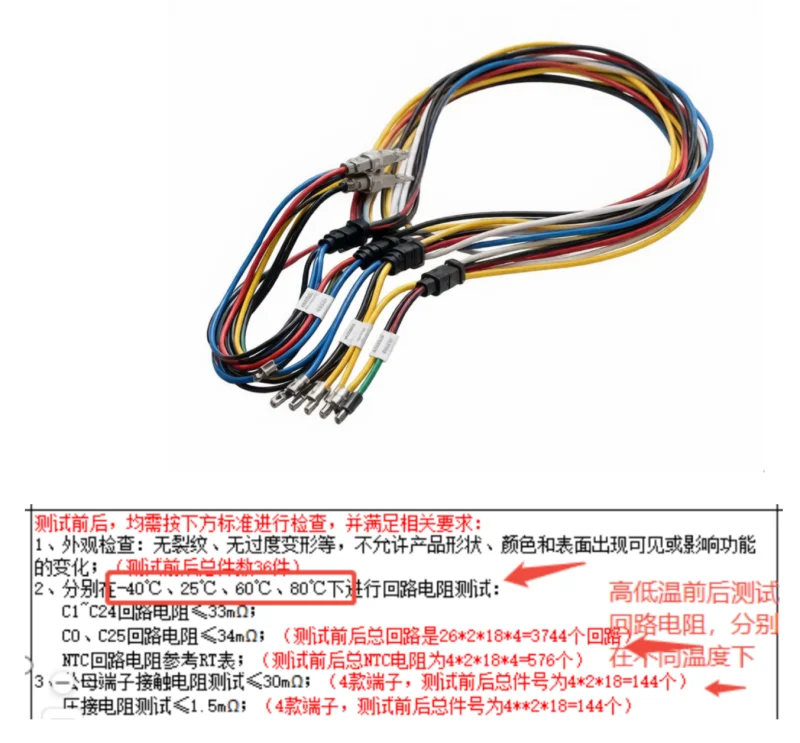
Detect the loop resistance of the full cable length and solder joints and screen abnormal values caused by cold solder, broken strands or poor crimping (the customer requires ≤33mΩ for C1~C24 loops).

2. Refined Contact Resistance Evaluation

Evaluate the risk of poor contact of male and female terminals caused by coating wear or terminal deformation (male terminals must be ≤1mΩ).

3. High-Speed Batch Scanning

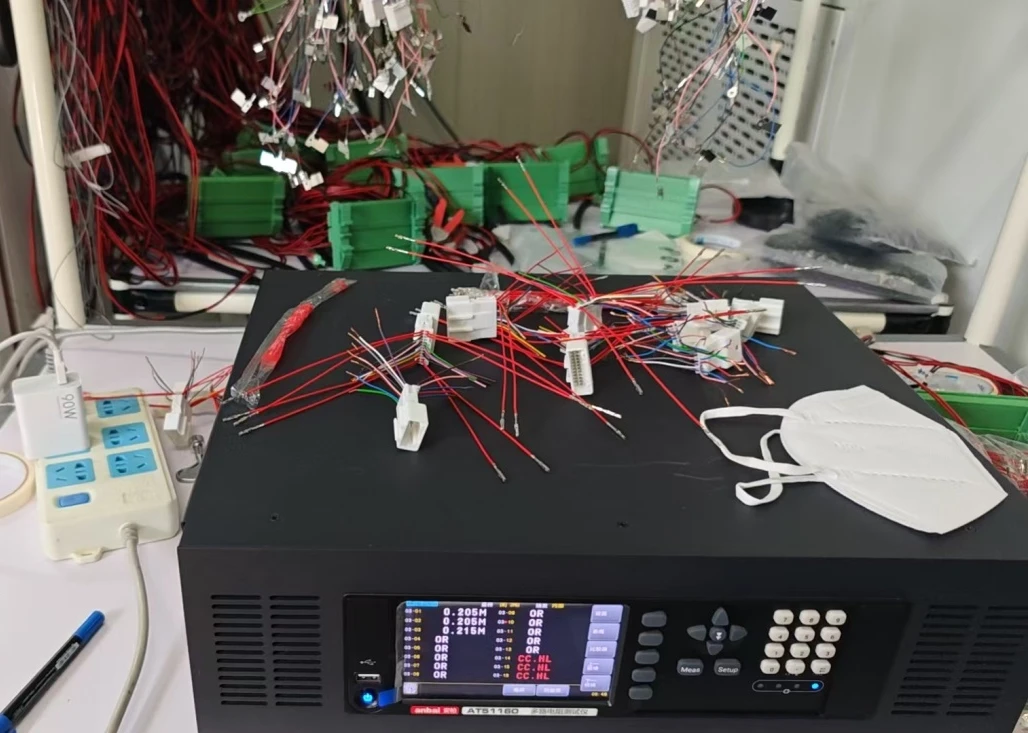
Perform automated full-node scanning of multi-core harnesses under different temperature conditions, replacing manual point-by-point measurement with traditional instruments and meeting the high takt time requirements of the production line.
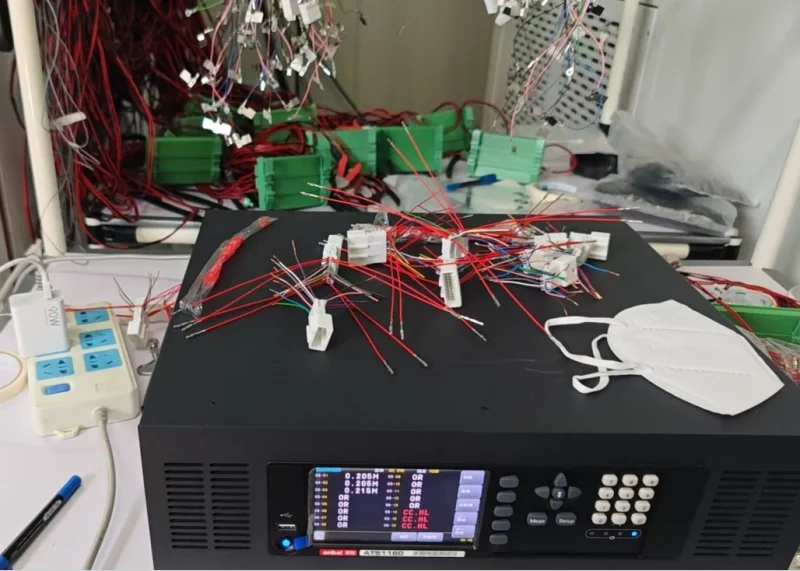
2. Equipment Selection and Configuration (Customer Case)

Ultra-Large Matrix and High Precision

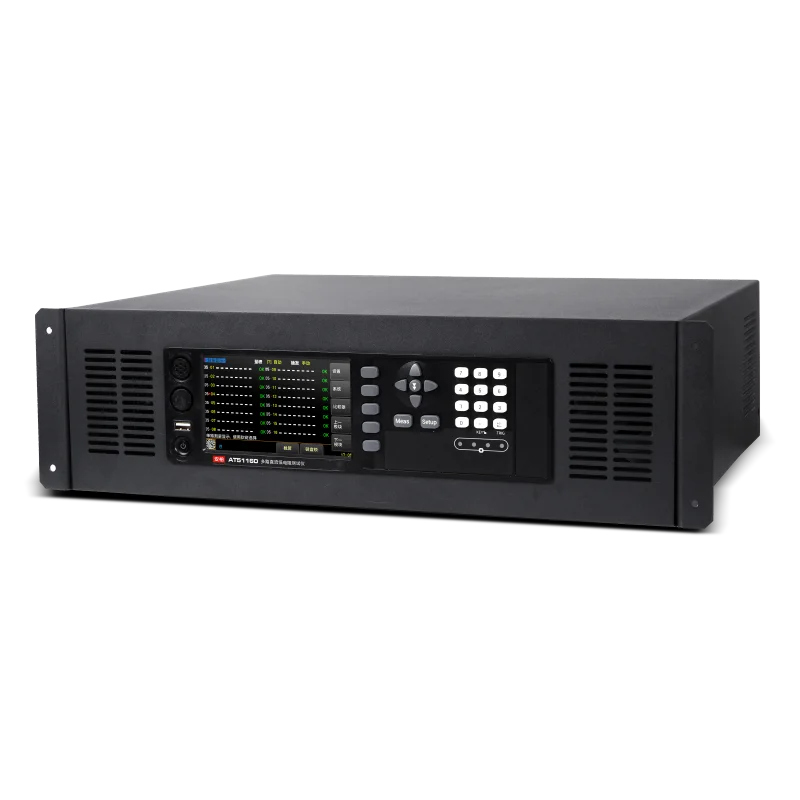
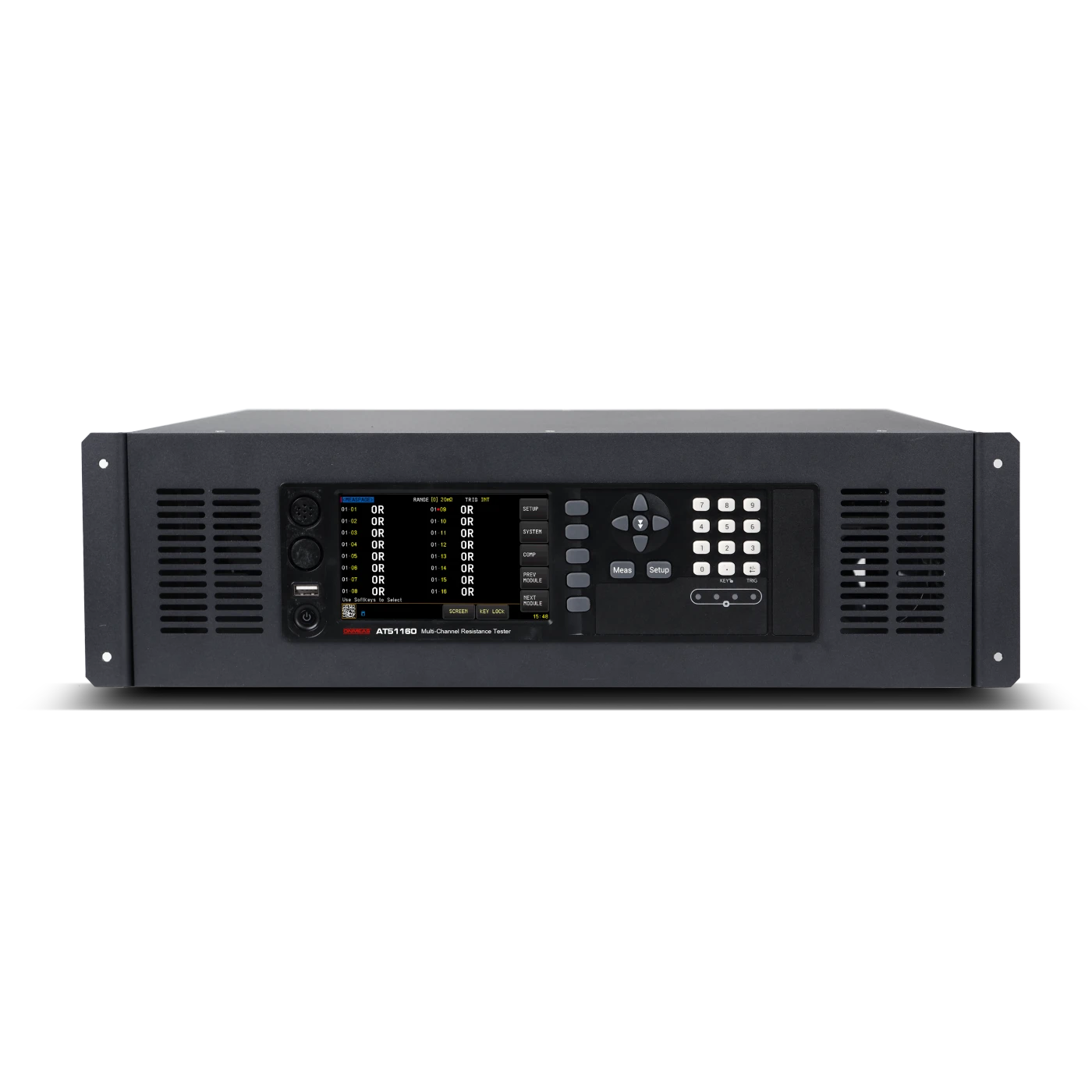
The instrument provides up to 160 test channels and supports wide-range measurement from 1μΩ~200kΩ with basic accuracy of 0.05%; the four-wire (Kelvin) test principle effectively eliminates the influence of test lead resistance and contact resistance and precisely locates μΩ-level poor contact.

High-Speed Scanning Capability

Its high-speed scanning function meets the requirements of industrial assembly line operation and significantly improves cable testing efficiency.

Combined Test Functions

Besides conventional low resistance testing, the AT51160 also integrates data recording and judgement, so a single instrument completes the full sequence of testing, screening and traceability without separate equipment.

Automation Interfaces and Smart Judgement

It is equipped with a Handler interface and RS-232/USB communication interfaces, fully compatible with the SCPI command set. The built-in comparator supports multiple upper/lower limit settings (different tolerances for loops such as C1, C24, C0 and C25) and outputs GD/NG signals in real time to drive sorting mechanisms or indicator lights; all test data (including time, channel number, resistance value and judgement result) is uploaded to the MES system in real time for full-process quality traceability.

3. Summary of Core Advantages

High Efficiency and High Integration

A single instrument replaces 160 single-channel testers and performs one-key fully automatic testing, greatly reducing equipment cost and human operating errors.

High Sensitivity and Data Authenticity

Based on four-terminal test technology, it precisely captures tiny contact resistance changes (below 1mΩ) and identifies hidden fault points that conventional methods can hardly find, improving product reliability.

Strong Interference Immunity and Stability

The optimised circuit design effectively suppresses interference, ensuring repeatability and accuracy of test data in complex electromagnetic environments.

Deep Informatisation and Intelligence

It connects seamlessly with factory automation and information systems for real-time monitoring of test data and SPC statistical analysis, helping enterprises transform quality control from inspection after the fact to prevention during the process.